Stretches for Lower Back Pain: Effective Exercises to Relieve Discomfort and Improve Mobility
Lower back pain is one of the most common health problems affecting people of all ages. Whether it is caused by poor posture, prolonged sitting, muscle strain, lack of physical activity, or daily stress, lower back discomfort can significantly impact quality of life. Fortunately, incorporating the right stretches for lower back pain into your daily routine can help reduce stiffness, improve flexibility, and support overall spinal health.
Stretching helps release tension in the muscles surrounding the spine, increases blood circulation, and promotes better movement patterns. When performed correctly and consistently, these stretches can provide relief from mild to moderate lower back pain and help prevent future episodes.
In this comprehensive guide, we will explore the best stretches for lower back pain, their benefits, and practical tips for safely incorporating them into your daily routine.
Understanding Lower Back Pain
Before diving into specific stretches, it is important to understand what causes lower back pain. The lower back, also known as the lumbar region, supports much of the body’s weight and plays a crucial role in movement and stability.
Common causes of lower back pain include:
- Poor posture while sitting or standing
- Muscle strains and ligament sprains
- Sedentary lifestyle
- Tight hamstrings and hip muscles
- Improper lifting techniques
- Obesity and excess weight
- Stress and muscle tension
- Age-related spinal changes
While stretching can help alleviate many forms of mechanical lower back pain, severe or persistent pain should always be evaluated by a healthcare professional.
Benefits of Stretching for Lower Back Pain
Regular stretching offers numerous benefits for individuals dealing with lower back discomfort.
Improved Flexibility
Tight muscles around the hips, hamstrings, and lower back can contribute to pain and restricted movement. Stretching helps improve flexibility and range of motion.
Reduced Muscle Tension
Many cases of lower back pain are associated with tight muscles. Stretching encourages relaxation and reduces muscle stiffness.
Better Posture
Poor posture places additional stress on the lower back. Stretching can help correct muscular imbalances that contribute to poor alignment.
Enhanced Blood Flow
Stretching increases circulation to muscles and tissues, promoting healing and reducing discomfort.
Prevention of Future Injuries
A flexible and balanced body is less likely to experience strains and injuries that can lead to recurring back pain.
Knee-to-Chest Stretch
The knee-to-chest stretch is one of the simplest and most effective stretches for lower back pain.
How to Perform It
- Lie flat on your back with your knees bent.
- Keep both feet flat on the floor.
- Bring one knee toward your chest.
- Hold it gently with both hands.
- Maintain the position for 20 to 30 seconds.
- Repeat on the other side.
Benefits
This stretch helps lengthen the lower back muscles and relieve tension in the lumbar region.
Double Knee-to-Chest Stretch
This variation provides a deeper stretch for the lower back.
Steps
- Lie comfortably on your back.
- Pull both knees toward your chest.
- Wrap your arms around your legs.
- Hold for 20 to 30 seconds.
- Release slowly.
Why It Helps
The double knee-to-chest stretch gently decompresses the spine and promotes relaxation of the lower back muscles.
Cat-Cow Stretch
The Cat-Cow stretch is a popular yoga movement that improves spinal mobility.
How to Do It
- Start on your hands and knees.
- Inhale while arching your back and lifting your head.
- Exhale while rounding your spine and tucking your chin.
- Continue the movement slowly for one minute.
Benefits
This stretch enhances spinal flexibility and reduces stiffness throughout the back.
Child’s Pose
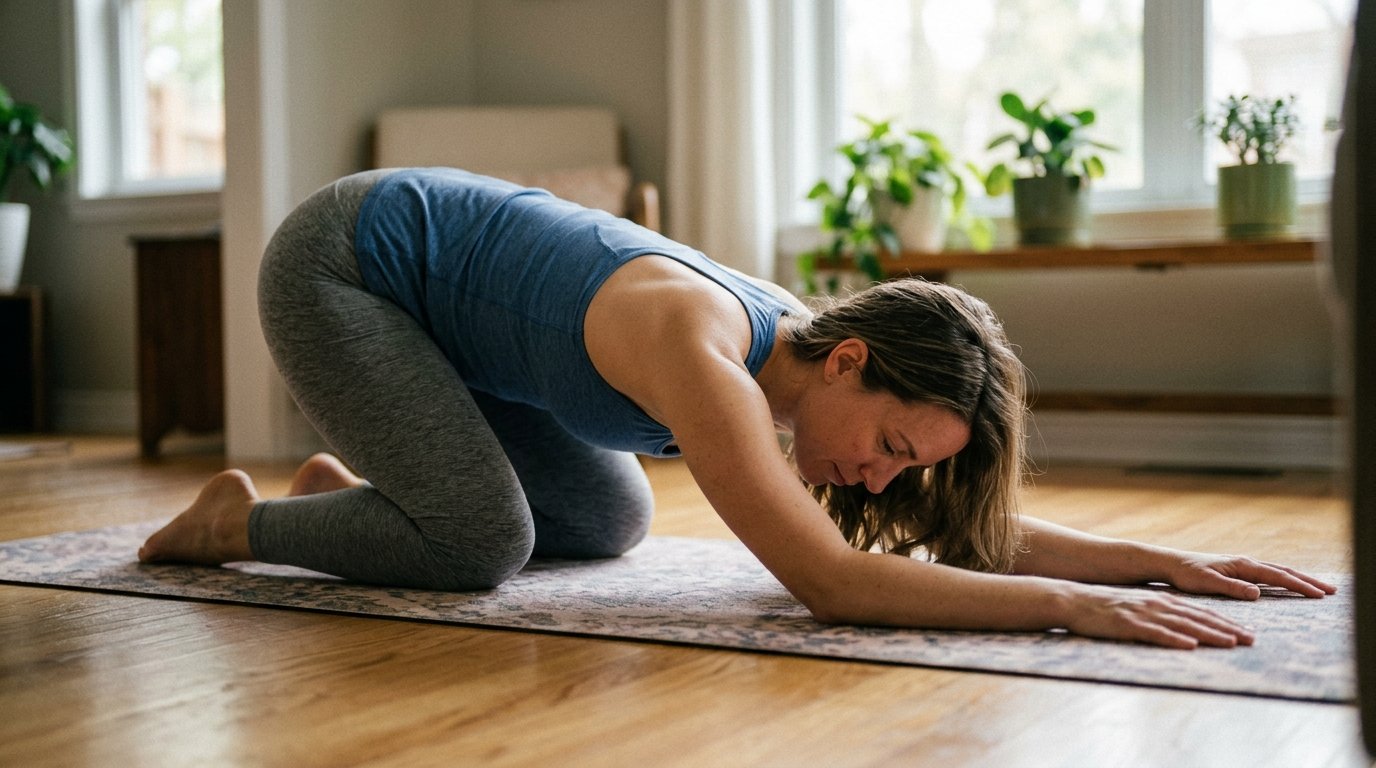
Child’s Pose is a restorative yoga stretch that gently elongates the lower back.
Instructions
- Kneel on the floor.
- Sit back on your heels.
- Extend your arms forward.
- Lower your chest toward the floor.
- Hold for 30 seconds to one minute.
Advantages
Child’s Pose helps release tension in the spine, hips, and surrounding muscles.
Pelvic Tilt Stretch
Pelvic tilts strengthen the abdominal muscles while relieving pressure on the lower back.
Steps
- Lie on your back with knees bent.
- Tighten your abdominal muscles.
- Flatten your lower back against the floor.
- Hold for a few seconds.
- Relax and repeat.
Benefits
This exercise promotes spinal stability and improves posture.
Seated Spinal Twist
The seated spinal twist helps improve mobility and reduce lower back tightness.
How to Perform
- Sit on the floor with legs extended.
- Bend one knee and place the foot outside the opposite leg.
- Twist gently toward the bent knee.
- Hold for 20 to 30 seconds.
- Repeat on the other side.
Why It Works
The twist stretches muscles along the spine and improves flexibility.
Cobra Stretch
The Cobra Stretch is commonly used to improve spinal extension.
Instructions
- Lie face down.
- Place your hands beneath your shoulders.
- Press through your hands and lift your chest.
- Keep your hips on the floor.
- Hold for 15 to 30 seconds.
Benefits
The Cobra Stretch helps counteract the effects of prolonged sitting and promotes spinal mobility.
Piriformis Stretch
Tight piriformis muscles can contribute to lower back discomfort and sciatic nerve irritation.
Steps
- Lie on your back.
- Cross one ankle over the opposite knee.
- Pull the supporting leg toward your chest.
- Hold for 20 to 30 seconds.
- Repeat on both sides.
Benefits
This stretch targets deep hip muscles that often contribute to lower back tension.
Hamstring Stretch
Tight hamstrings frequently place additional stress on the lower back.
How to Do It
- Sit with one leg extended.
- Reach toward your toes.
- Keep your back straight.
- Hold for 20 to 30 seconds.
Why It Helps
Improving hamstring flexibility can reduce strain on the lumbar spine.
Hip Flexor Stretch
Many people who sit for long periods develop tight hip flexors.
Instructions
- Begin in a lunge position.
- Lower one knee to the floor.
- Shift your weight forward.
- Feel the stretch in the front of the hip.
- Hold for 30 seconds.
Benefits
This stretch improves pelvic alignment and reduces lower back stress.
Supine Twist Stretch
The supine twist is another effective movement for relieving back tension.
Steps
- Lie on your back.
- Bring your knees toward your chest.
- Lower both knees to one side.
- Extend your arms outward.
- Hold for 30 seconds.
Advantages
This gentle rotation improves spinal mobility and reduces muscle tightness.
Standing Forward Bend
The standing forward bend can help stretch the back and hamstrings.
How to Perform
- Stand with feet hip-width apart.
- Slowly bend forward from the hips.
- Allow your arms to hang naturally.
- Hold for 20 to 30 seconds.
Benefits
This stretch lengthens muscles throughout the back of the body.
Daily Stretching Routine for Lower Back Pain
A simple daily routine may include:
- Knee-to-Chest Stretch – 30 seconds each side
- Cat-Cow Stretch – 1 minute
- Child’s Pose – 1 minute
- Piriformis Stretch – 30 seconds each side
- Hamstring Stretch – 30 seconds each side
- Cobra Stretch – 20 seconds
- Supine Twist – 30 seconds each side
Performing these stretches consistently can help improve flexibility and reduce recurring discomfort.
Safety Tips When Stretching
To maximize benefits and avoid injury:
- Stretch slowly and gently.
- Never force a movement.
- Breathe normally throughout each stretch.
- Stop immediately if pain worsens.
- Warm up before intense stretching.
- Maintain proper form.
If you experience severe pain, numbness, weakness, or symptoms that radiate down your legs, seek medical advice before continuing.
Additional Ways to Prevent Lower Back Pain
Stretching works best when combined with healthy lifestyle habits.
Maintain Good Posture
Keep your spine aligned while sitting, standing, and working.
Stay Active
Regular walking, swimming, and low-impact exercise support spinal health.
Strengthen Core Muscles
Strong abdominal and back muscles provide essential support for the spine.
Lift Properly
Always bend your knees and keep heavy objects close to your body.
Manage Body Weight
Maintaining a healthy weight reduces stress on the lower back.
Take Frequent Breaks
Avoid sitting for extended periods without standing or stretching.
When to See a Doctor
While many cases of lower back pain improve with stretching and exercise, medical attention may be necessary if:
- Pain lasts longer than several weeks.
- Symptoms become progressively worse.
- Pain follows an injury.
- Numbness or tingling develops.
- Weakness occurs in the legs.
- Bowel or bladder control changes.
Professional evaluation can identify underlying conditions requiring specialized treatment.
Frequently Asked Questions
What is the best stretch for lower back pain?
The knee-to-chest stretch and Child’s Pose are often considered among the most effective stretches for relieving lower back discomfort.
How often should I stretch for lower back pain?
Most individuals benefit from stretching daily or at least three to five times per week.
Can stretching make lower back pain worse?
Improper technique or overstretching may worsen symptoms. Always stretch gently and stop if pain increases.
How long should I hold each stretch?
Most stretches should be held for 20 to 30 seconds and repeated two to three times.
Are yoga stretches good for lower back pain?
Yes, many yoga poses such as Child’s Pose, Cat-Cow, and Cobra Stretch can help improve flexibility and reduce discomfort.
Conclusion
Incorporating effective stretches for lower back pain into your daily routine can significantly improve flexibility, reduce muscle tension, and enhance overall spinal health. From simple movements like the knee-to-chest stretch to restorative poses such as Child’s Pose and Cat-Cow, these exercises offer a natural and accessible way to manage discomfort.
Consistency is the key to achieving lasting results. By combining stretching with good posture, regular physical activity, and healthy lifestyle habits, you can reduce the likelihood of recurring back pain and enjoy greater comfort in your everyday life. Always listen to your body, perform stretches safely, and consult a healthcare professional if symptoms persist or worsen.